
Pregnancy & Maternity · Practical checklist
Hospital Bag Checklist for Delivery Day: What to Pack and What to Skip
Written and medically reviewed by Dr Humaira Latif, MBBS, Gynae & Obstetrics Specialist, Ultrasound Specialist · 14+ years of clinical experience
Last reviewed: October 2026
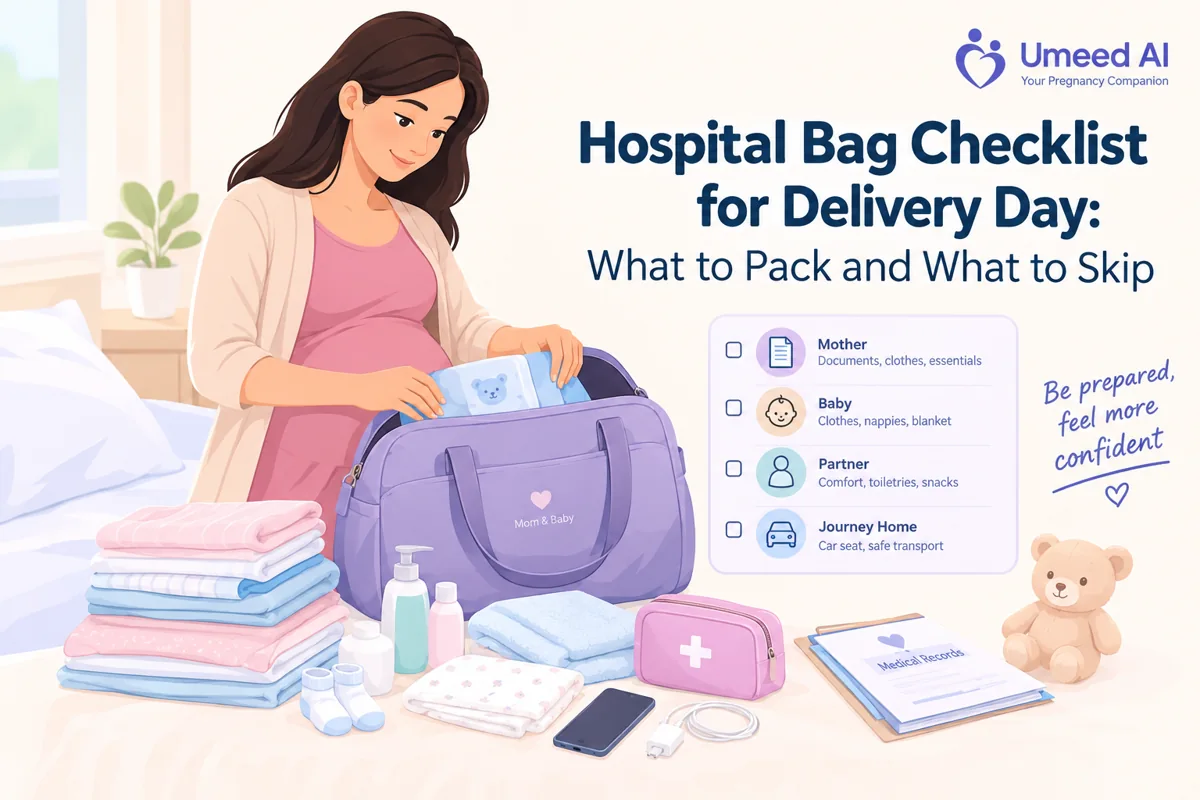
Getting your hospital bag ready can make the final weeks of pregnancy feel much more manageable. But you do not need to pack your entire home.
A practical delivery bag should contain the things you are most likely to need during labour, immediately after birth, and when you and your baby are ready to go home.
Every hospital and maternity unit has different policies and may provide some supplies themselves. Before packing, ask your maternity team what they provide and what they expect you to bring.
It is sensible to have your main bag ready before the final weeks of pregnancy. Many maternity services suggest preparing around 35 to 37 weeks, or earlier if your doctor or maternity team advises you to do so.
Is your hospital bag ready?
Mother: 0/15
Baby: 0/8
Birth partner: 0/8
Hospital Bag: 0% ready
The easiest way to pack
Instead of putting everything into one large suitcase, consider using:
- A small labour bag
- A main postpartum bag
- A separate baby bag
- A small bag for your birth partner
This makes important items easier to find when you are tired, uncomfortable or in active labour.
Important documents and medical information
Keep these together in an easily accessible folder or pouch.
- Pregnancy or maternity records
- Recent investigation reports if your doctor has advised you to bring them
- Ultrasound reports if relevant
- Blood group information if available
- Birth preferences or birth plan, if you have one
- Identification documents required by your hospital
- Insurance or hospital admission documents, if applicable
- List of your regular medicines
- Important emergency contact numbers
What to pack for yourself
Clothing
- 1–2 loose, comfortable outfits for labour
- 2–3 comfortable changes of clothes for after delivery
- Loose clothes for going home
- Comfortable underwear
- Nursing or feeding-friendly bras, if desired
- Front-opening nightwear if you plan to breastfeed
- Socks
- Lightweight dressing gown
- Slippers or comfortable washable footwear
Maternity pads and personal hygiene
- Maternity or postpartum pads
- Comfortable, high-waisted underwear
- Toothbrush and toothpaste
- Soap or body wash
- Shampoo if needed
- Deodorant
- Hairbrush
- Hair ties or clips
- Lip balm
- Hand sanitiser if useful
- Small towel if your hospital does not provide one
Bleeding after childbirth, called lochia, is expected after both vaginal birth and caesarean birth. Do not use tampons after delivery unless specifically advised by your healthcare professional.
Medicines and health essentials
- Regular prescribed medicines
- Glasses
- Contact lens supplies if applicable
- Any medically necessary equipment you normally use
- Diabetes monitoring equipment if your maternity team has instructed you to bring it
Phone and comfort items
- Mobile phone
- Charger
- Long charging cable or power bank if permitted
- Headphones
- Small water bottle
- Snacks, if permitted by your maternity team
- Small fan or cooling item if useful
- Music or relaxation playlist
- Eye mask if useful
What to pack for your baby
Your newborn does not need a huge wardrobe. A small number of basic items is usually enough for the initial hospital stay.
Baby clothing
- 2–4 newborn outfits
- 2–4 vests or bodysuits, depending on local practice and weather
- 2–4 sleepsuits
- 1 outfit for going home
- Socks or booties if needed
- Hat if recommended for your baby’s environment
- Lightweight blanket or shawl
- A few muslin cloths
Diapering
- Newborn nappies
- Cotton wool or wipes according to your hospital’s recommendations
- Changing supplies if your hospital does not provide them
Do not forget the journey home
One item deserves special attention: a safe infant car seat. If your baby will travel home by car, arrange an appropriate infant car seat before delivery. Do not leave this preparation until discharge day. If you are travelling by another method, follow the safety requirements appropriate for that transport.
What should your birth partner pack?
- Phone
- Charger
- Comfortable clothes
- Basic toiletries
- Water bottle
- Snacks
- Any regular medicines
- Identification and payment method if required
- Important contact numbers
What most people over-pack
You probably do not need to bring everything you see on a viral hospital-bag checklist.
Pack fewer essentials and keep extra supplies at home. Your birth partner can often bring additional items later if your hospital stay is longer than expected.
What not to bring unnecessarily
Avoid taking valuable items unless absolutely necessary.
- Expensive jewellery
- Large amounts of cash
- Unnecessary electronics
- Bulky luggage
- Large quantities of baby products
Your grab-and-go labour pouch
One of the smartest ways to organize your bag is to prepare a small labour pouch. Put the things you may need immediately in one small pouch.
- Pregnancy records
- ID
- Birth preferences
- Phone
- Charger
- Lip balm
- Hair tie
- Maternity pad
- Comfortable underwear
- Water bottle
- Essential medication information
What if you are having a planned caesarean birth?
Your basic hospital bag remains similar, but you may want to prepare for a potentially longer recovery and hospital stay.
- Loose, comfortable clothing
- High-waisted underwear
- Postpartum or maternity pads
- Easy-access breastfeeding clothes
- Toiletries
- Comfortable footwear
- Baby clothes and nappies
- Medical records and medications
Choose clothing that does not place pressure directly over your incision. Your own obstetric team should guide you regarding the expected hospital stay and any specific items required by your hospital.
What if you are planning a vaginal birth?
Pack for flexibility. Labour can be unpredictable, and your final mode of birth may sometimes change. For example, a planned vaginal birth may result in an assisted birth or caesarean birth if medically necessary. That is why your bag should focus on general maternity essentials rather than packing only for one exact scenario. A birth plan can communicate your preferences, but it should remain flexible because circumstances can change during labour.
A simple delivery-day checklist
Tap items as you pack. Your progress is saved on this device.
Mother 0/15
Baby 0/8
Birth partner 0/8
When should you pack your delivery bag?
There is no single perfect week for every pregnant woman. A practical approach is to have the essential bag ready by the late third trimester, commonly around 35–37 weeks, or earlier if your obstetrician advises it.
You may want to prepare earlier if you:
- Have previously experienced preterm labour
- Have a pregnancy complication
- Live far from your planned maternity facility
- Have been advised that early delivery is possible
- Are expecting twins or multiples
- Have been advised to remain close to the hospital
Your own maternity team should give you individualized advice when appropriate.
Keep a small emergency plan with your bag
Where will you go?
Know your planned maternity facility.
How will you get there?
Arrange reliable transportation.
Who will accompany you?
Discuss this in advance.
Who should be contacted?
Keep important numbers accessible.
Where are your medical records? Make sure they can be found quickly. What if labour starts earlier than expected? Make sure your household knows where the bag is kept.
When should you contact your maternity team?
Packing your bag does not mean you should wait until your due date if you develop concerning symptoms. Contact your maternity team or seek urgent assessment according to your local maternity advice if you experience symptoms such as:
- Vaginal bleeding
- Suspected rupture of membranes
- Regular painful contractions suggesting labour
- Reduced or changed fetal movements
- Severe abdominal pain
- Severe headache or visual disturbance
- Sudden swelling with other concerning symptoms
- Any other symptom your doctor has told you requires urgent assessment
If you think your waters have broken, do not rely on the hospital bag checklist alone. Contact your maternity team for advice.
Amniotic fluid may present as a sudden gush or a continuous trickle that you cannot control.
The less-is-more hospital bag rule
Final checklist before leaving home
Frequently asked questions
When should I pack my hospital bag?
Many maternity services suggest around 35–37 weeks, or earlier if your maternity team advises you.
What should I pack for labour?
Keep maternity records, ID, comfortable clothes, maternity pads, toiletries, medicines, water and your phone and charger easy to reach.
What should I pack for my newborn?
Pack a few outfits, nappies, muslins, a blanket and a safe arrangement for travelling home. Check what your hospital provides.
How many baby clothes should I take to the hospital?
A few newborn outfits, vests and sleepsuits are usually enough for an initial stay; your hospital and length of stay may differ.
Do I need to take maternity pads?
Usually yes, unless your hospital provides them. Ask your maternity team what is supplied.
Should I pack a separate bag for my birth partner?
A small separate bag for their clothes, charger, water, snacks and medicines makes things easier to find.
What should I not pack in my hospital bag?
Avoid valuables, bulky luggage, excessive toiletries and more baby clothes or nappies than you are likely to need.
What should I do if my waters break before I am ready?
Contact your maternity team promptly for advice. Do not delay seeking advice to finish packing.
Do I need a car seat for my newborn?
If your baby will travel home by car, arrange an appropriate infant car seat before delivery. Follow local transport safety requirements.
Does every hospital provide the same supplies?
No. Ask your planned maternity facility about its supplies, admission requirements and visitor policies.
Medical references and further reading
- NHS — Hospital bag checklist
- NHS — Signs that labour has begun and waters breaking
- NHS — Your baby's movements
- NHS — Your body after the birth